Description
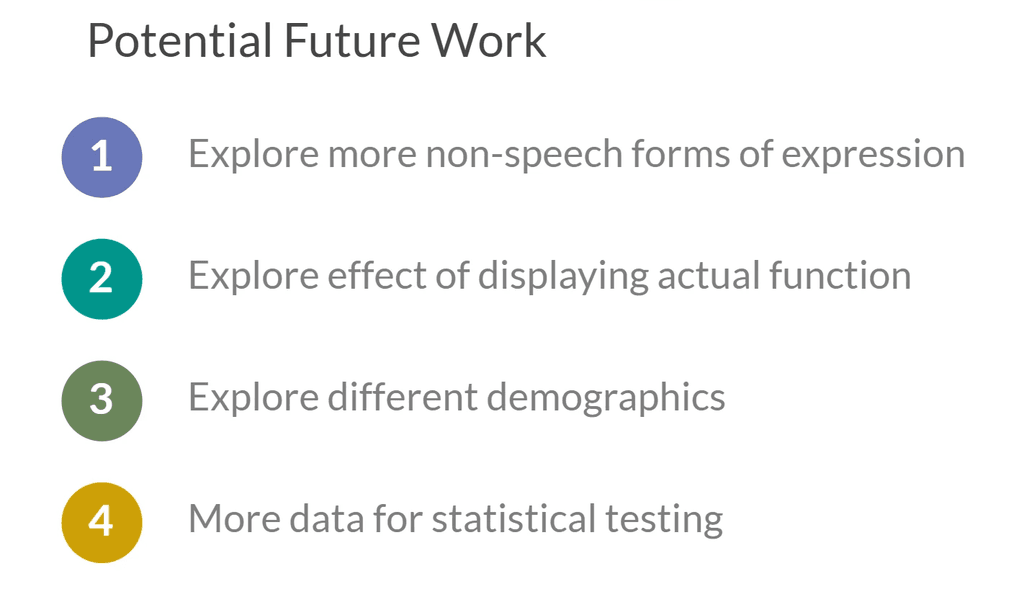
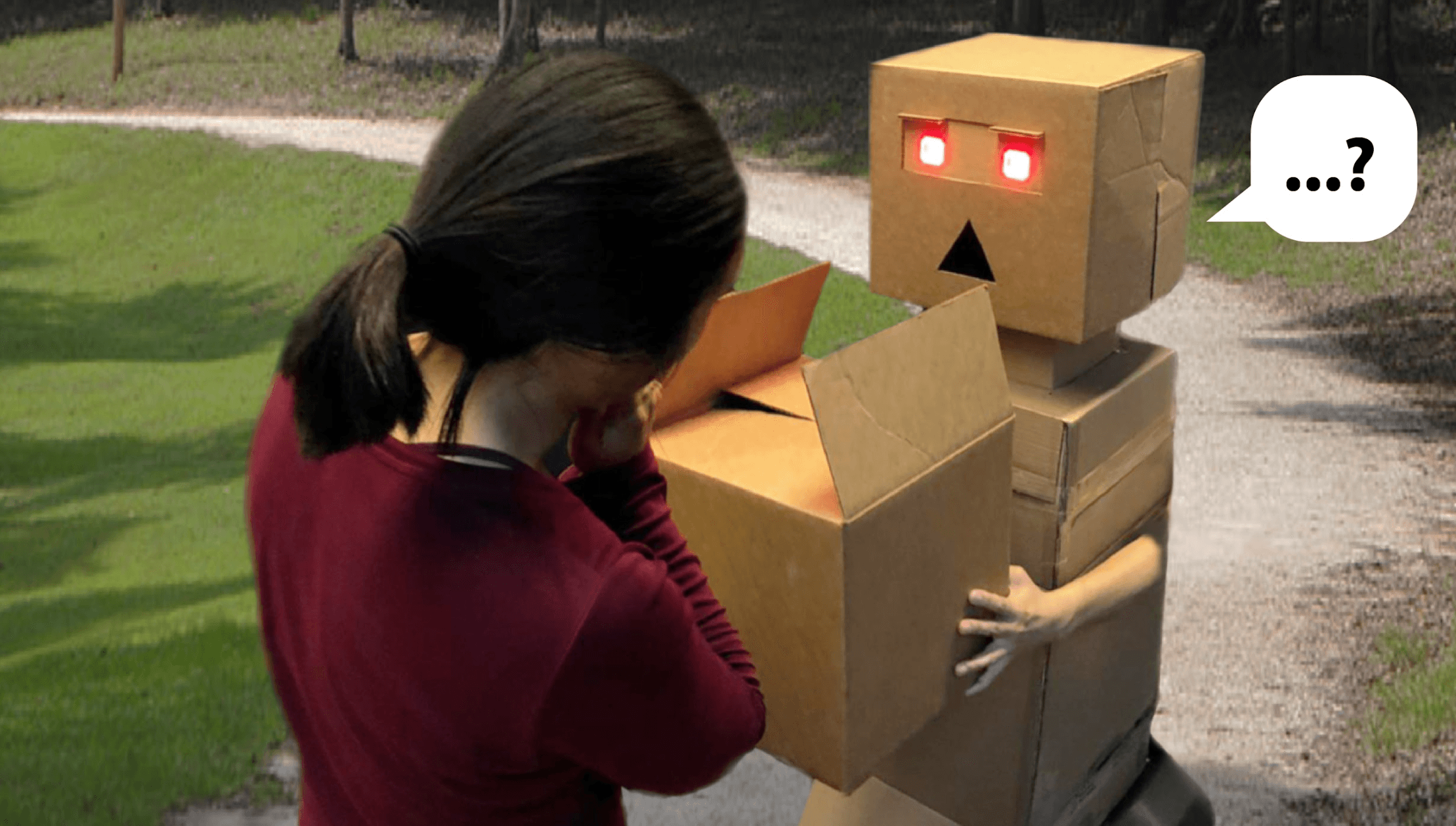
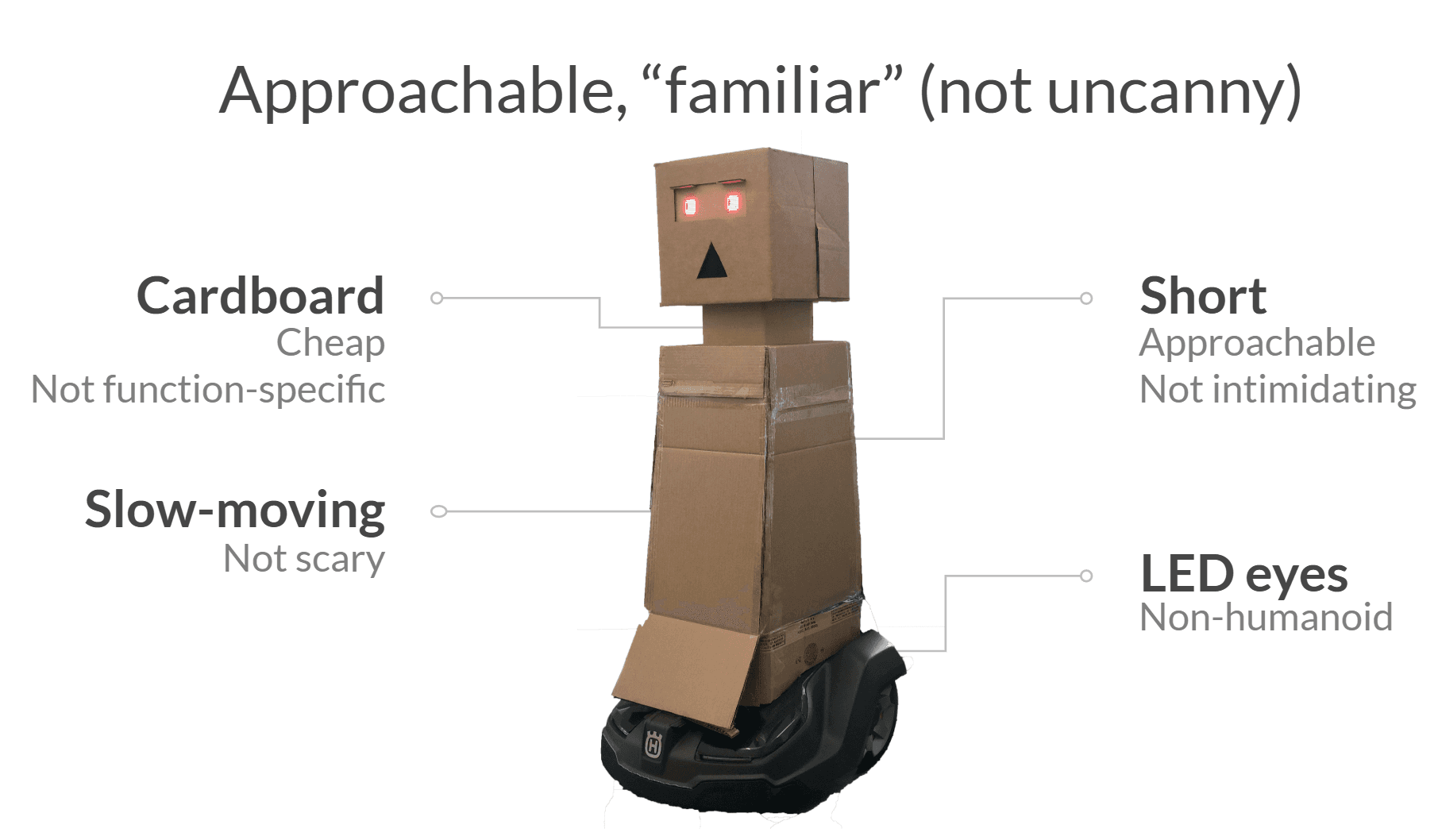
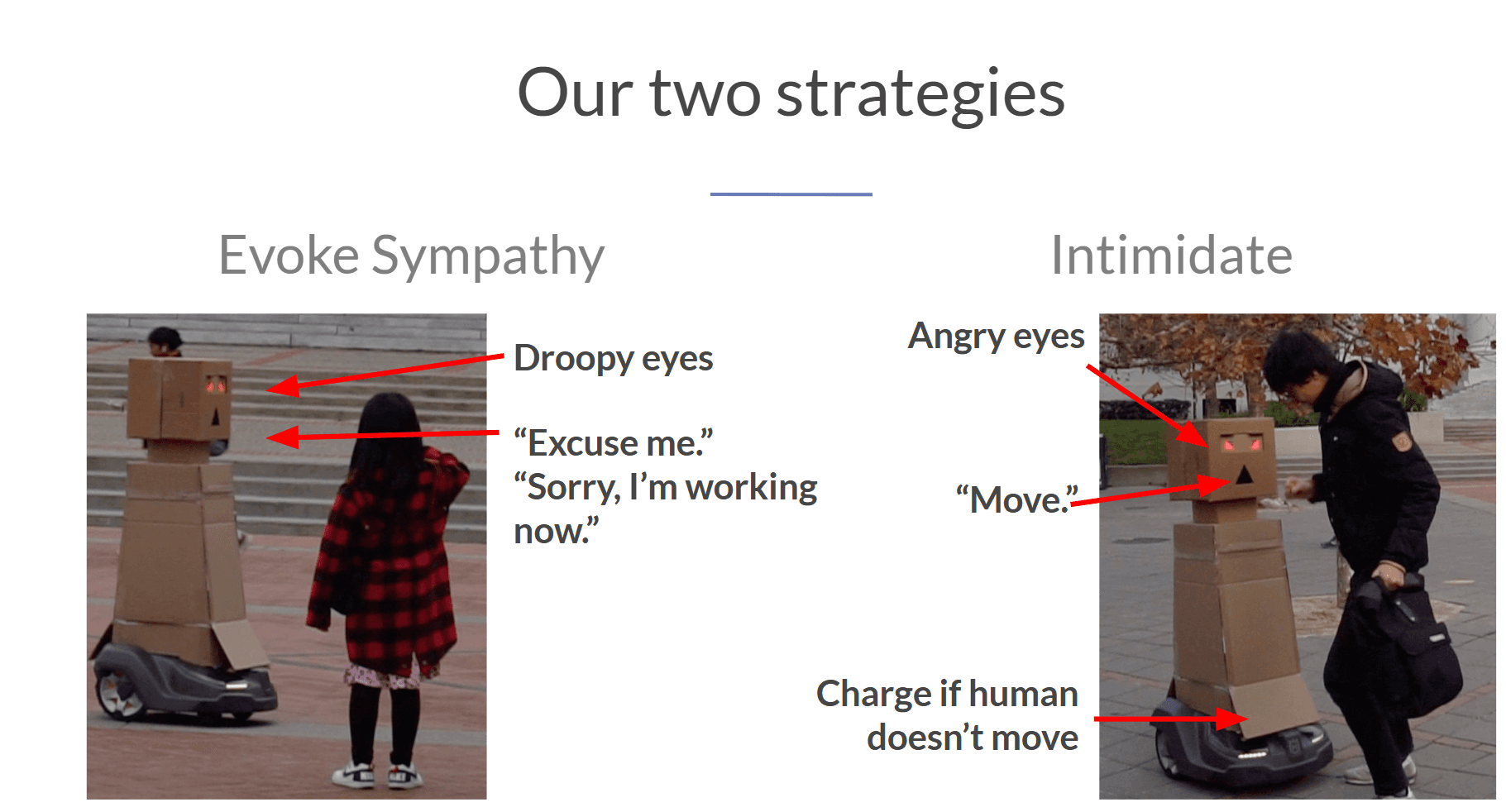
Moving robots are currently equipped with limited responses when encountering humans as obstacles. A robot that encounters a human in its path will simply pause to allow the human to clear the way or, at best, will make an attempt to circumvent the human. While most people we observe on Berkeley's campus move out of the way when encountering a moving robot, in a handful of cases, perhaps out of mere curiosity or perhaps with malicious intent, a human will test the robot by intentionally blocking its path. Encountering Humans is a research project studying how people react to robots who express themselves in a way that encourages humans to move. My team designed Boxy, a Raspberry Pi controlled Husquavarna robot, with two modalities of expression and tested which is more effective. In the first mode, the robot attempts to evoke sympathy, and in the second, the robot attempts to scare the human into submission.
Date: November 2019
Collaborators: Katherine Song, Yakira Mirabito, Paul Stott
My Contributions: experiment design, data collection and analysis
Findings
Our guiding research question was "How can we design robots to encourage humans to let them do their jobs?".
Our low fidelity prototype of the robot helped us test these ideas quickly for this short design sprint and research exploration. Interactivity was simulated as we controlled the robots speech. We tested for three conditions on Sproul plaza in Berkeley:
Do nothing
Evoke sympathy
Intimidate
High level observations from our initial data collection:
25% of people test the robots for 15-60 seconds.
Sympathy results in multiple minutes of photos.
Intimidation gets people to move.
Analyzing all encounters, we found that:
Speech is confounding: “Nice” speech isn’t taken seriously regardless of content. Speech creates expectation of conversation.
Pick sternness over cuteness. Demands are taken more seriously with “angry eyes”
Age and gender matter: Older people have more buy-in with respect to abilities, but also maybe more curiosity. Students are more concerned with how autonomous the robot is. Teenage boys were the most disruptive group when it came to interrupting the robots.
Groups are trouble: There's a “snowball effect” for engaging with robot and people “test” robot more when with others. Lone walkers are more self-conscious